-
-
Alabaster Chandelier

-
Alabaster Pendant

-
Alabaster Wall

-
Alabaster Ceiling

-
Alabaster Table Lamp

-
Travertine Pendant

-
Travertine Wall

-
Travertine Ceiling

-
Travertine Table Lamp

-
Light Source

-
Alabaster Chandelier
Alabaster vs Marble Lamps: What's the Difference?
Both are natural stones and both make beautiful lighting — but alabaster and marble behave very differently inside a lamp. Here is how to tell them apart, how an alabaster lamp is actually made, and how to care for each. Written by iHOME Lighting, a Chinese factory specialised in natural stone lighting — our core lighting team has been in the industry since 2010.
What is alabaster?
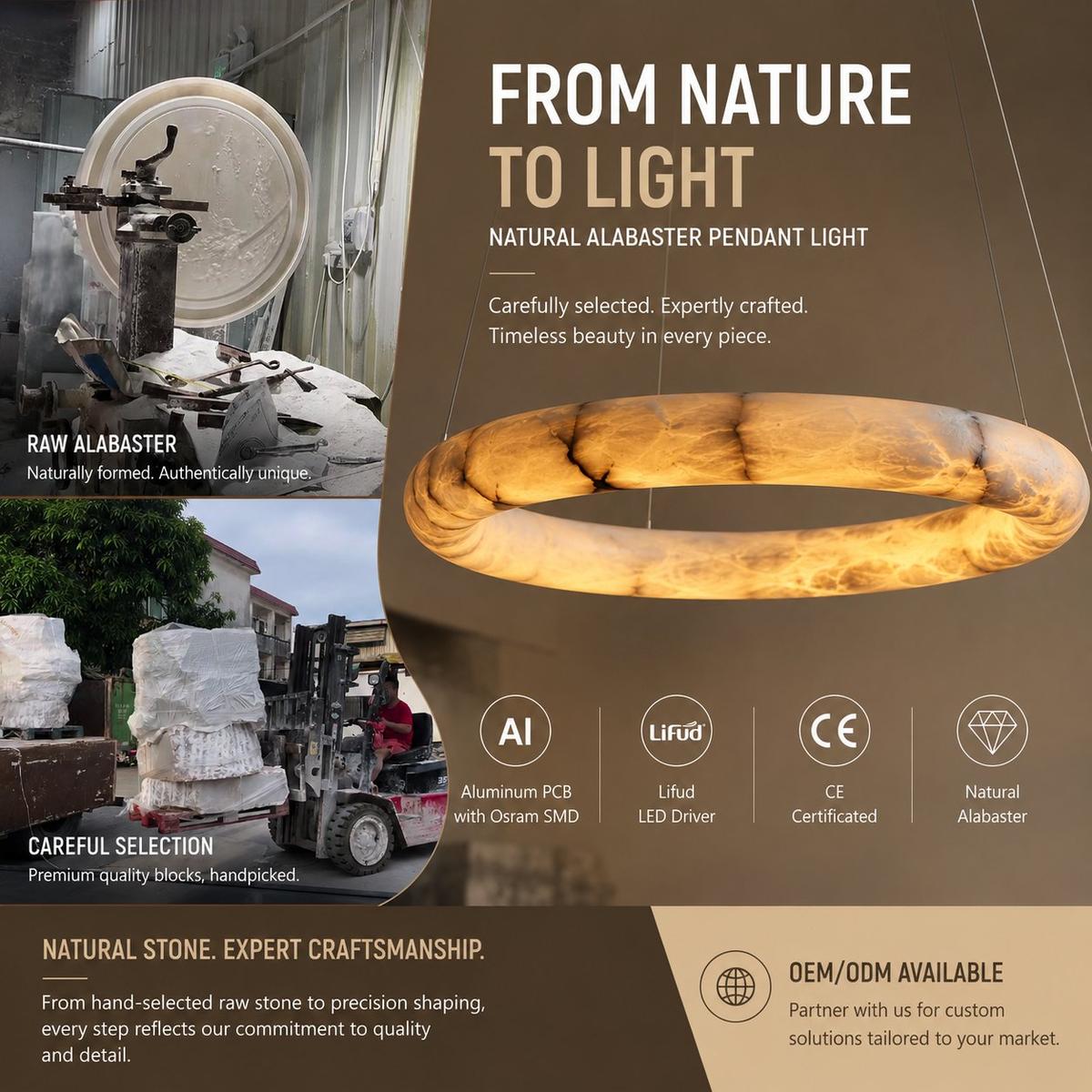
Alabaster is a fine-grained, translucent variety of gypsum. It is soft enough to be turned and carved on a lathe, which is why alabaster lamps often have smooth, rounded shapes. Its most prized property is light transmission: when the lamp is switched on, light passes through the stone and glows softly instead of bouncing off a hard surface.
What is marble?
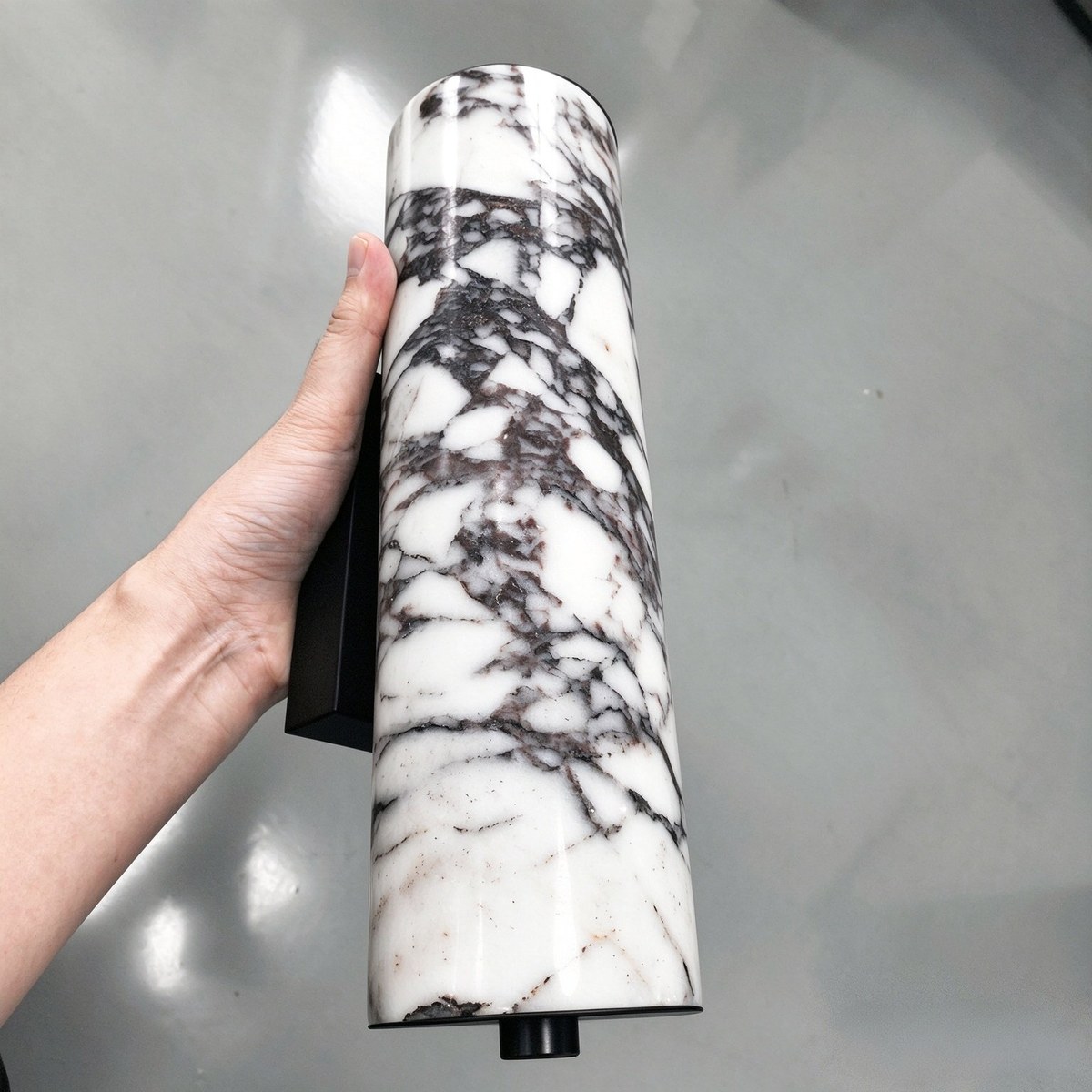
Marble is a much harder metamorphic rock, formed mainly of calcite. It takes a high polish, shows dramatic veining, and is far more scratch- and impact-resistant than alabaster. In lighting, marble is usually used as a polished, light-reflecting material rather than a light-transmitting one.
What is the difference between alabaster and marble lamps? Here are 5 key differences at a glance.
5 key differences at a glance
- Light effect — alabaster glows (light passes through); marble reflects (light bounces off the polished surface). If you want a soft, ambient halo, alabaster wins.
- Veining & appearance — alabaster shows cloudy, banded veining in warm whites and honeys; marble shows sharper, contrastier veins in white/grey or green tones.
- Hardness & durability — alabaster is soft (it can be scratched by a knife); marble is significantly harder and more suitable for high-traffic installations.
- Weight — both are dense natural stone, but large marble shades are generally heavier than the same shape in alabaster.
- Care — both need gentle treatment: a dry soft cloth, and no acidic cleaners (vinegar, lemon, bleach will etch the surface). Alabaster, being softer, needs the gentler hand.
How is an alabaster lamp made?
Every natural alabaster lamp follows the same craft chain in our factory:
- Block selection — raw alabaster blocks are inspected for translucency and veining.
- Cutting — blocks are sliced into slabs or blanks for shades and bodies.
- Turning & carving — the blanks are shaped on a lathe or carved by hand into the designed form.
- Sanding — several grit stages take the surface from rough to silky.
- Assembly — the shade is fitted to its lampholder (E27/GU10/G9) or integrated LED module.
- Quality control — electrical safety check per EN 60598 standards, plus a natural-veining inspection.
Because veining is unique to each block, no two finished lamps look exactly the same — this is a feature, not a defect, and it is what makes natural stone lighting collectible.
Is alabaster good for lamp shades?
Yes — and it has been prized for exactly this purpose for centuries. Alabaster is translucent, so it diffuses light into a warm, even glow, and it hides the bulb better than glass. It is best suited to indoor ambient lighting: bedroom, dining room, hotel suite and lobby fixtures. The trade-off is softness — alabaster shades should not be used as grab handles or placed where they can be knocked.
How do you clean an alabaster lamp?
- Dust with a dry, soft cloth — this is 95% of the job.
- For fingerprints or stains, use a slightly damp soft cloth, then dry immediately.
- Never use acidic or abrasive cleaners: vinegar, lemon, bleach, scouring powders and melamine sponges will etch or dull the stone.
- Do not soak the shade, and keep water away from the electrical parts.
Which one should you choose?
- Ambience first (bedrooms, dining rooms, hotel suites): choose alabaster for its glow.
- Durability first (busy lobbies, commercial tabletops): choose marble or travertine for their hardness.
- Can't decide? Many of our project clients mix both in one space — alabaster pendants over tables, travertine or marble wall lights along corridors.
Explore our alabaster lamps collection or contact us for the full stone lighting catalogue and project references.